
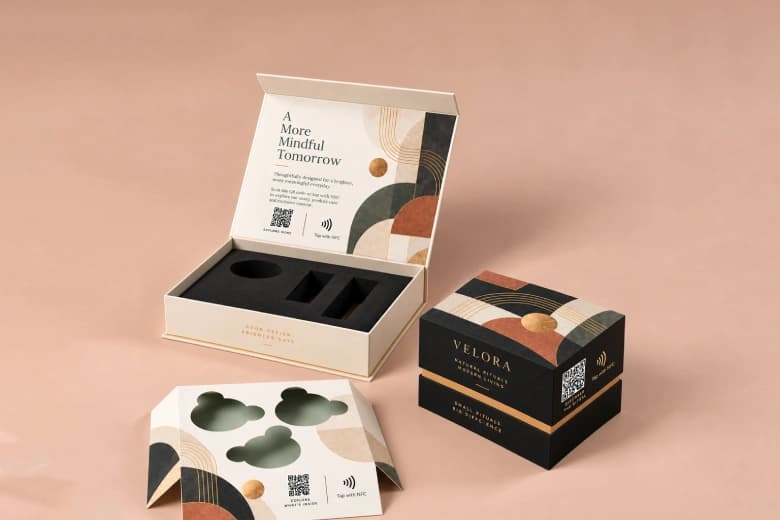
Packaging has evolved far beyond its traditional role of protecting products. Today, it’s a powerful marketing tool, a brand storyteller, and a bridge between physical and digital experiences.
When it comes to custom rigid boxes, we know them for their durability and premium appeal. Interestingly, these boxes are increasingly being enhanced with smart technologies like QR codes and NFC tags. These innovations transform packaging into interactive gateways, offering customers instant access to information, promotions, and authentication.
So, let’s explore QR codes and NFC tags on custom rigid boxes in detail, including their features, benefits, and how industries use them to elevate packaging experiences.
What Is a QR Code?
QR codes (Quick Response codes) are two-dimensional barcodes that store information in a grid of black-and-white squares. They can be scanned using a smartphone camera, instantly connecting users to digital content.
Features of QR Codes:
- Universal compatibility: Works with almost all smartphones.
- Flexible data storage: Can hold URLs, text, or product details.
- Easy to generate: Free tools make QR code creation simple.
- Trackable: Brands can monitor scan activity for insights.
Appearance:
- Typically square-shaped with black and white modules.
- Can be customized with logos, colors, or creative patterns.
- Often printed directly on packaging surfaces.
Main Purposes:
- Redirect customers to your websites or landing pages.
- Share product details, manuals, or recipes.
- Enable discounts, loyalty programs, or contests.
- Support logistics and inventory tracking.
What Are NFC Tags?
NFC (Near Field Communication) tags are small chips that enable wireless communication when tapped with a smartphone. Unlike QR codes, they don’t require a camera scan — just proximity.
Features of NFC Tags:
- Instant interaction: Tap-to-connect is faster than scanning.
- Secure storage: Can hold encrypted data.
- Reusable: Data can be rewritten or updated.
- Invisible integration: Embedded seamlessly into packaging.
Appearance:
- Thin stickers or embedded chips.
- Often hidden inside packaging layers.
- Can be integrated without altering box design.
Main Purposes:
- Authenticate luxury or premium products.
- Enable contactless payments or loyalty rewards.
- Provide immersive brand experiences.
- Track supply chain and logistics data.
QR Codes vs NFC Tags: Quick Comparison
| Aspect | QR Codes | NFC Tags |
| Interaction | Scan with camera | Tap with phone |
| Visibility | Printed and visible | Hidden or embedded |
| Data Capacity | Limited | Larger, more secure |
| Customization | Easy to design | Requires chip integration |
| Best Use Case | Marketing, promotions | Authentication, premium branding |
| Cost | Very low | Higher (chip required) |
QR Codes and NFC Tags on Custom Rigid Boxes
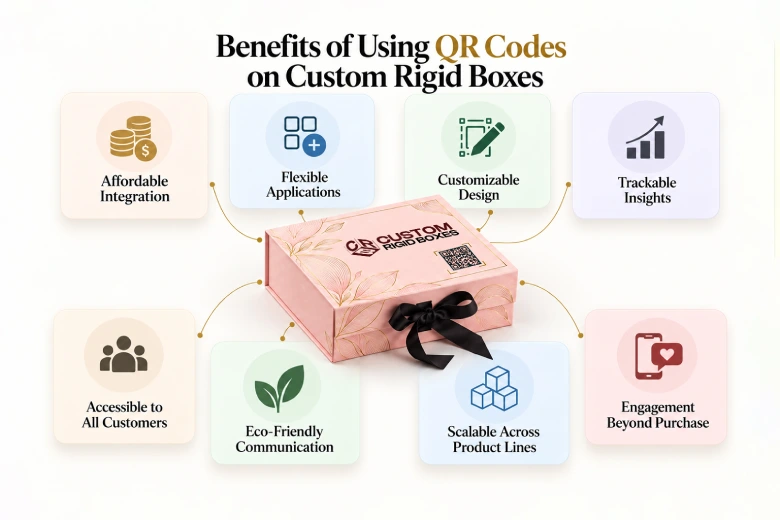
Rigid boxes have been considered premium packaging. Adding QR codes or NFC tags elevates them further, turning them into smart packaging solutions. These technologies enhance customer trust, provide instant access to information, and create memorable unboxing experiences.
Benefits of Using QR Codes on Custom Rigid Boxes
QR codes are one of the most cost-effective ways to add digital functionality to packaging. On rigid boxes, they serve as a bridge between the physical product and the online world. Here’s how they add value.
- Affordable Integration
Printing a QR code requires no special hardware. It can be added during the design stage at minimal cost, making it ideal for brands of all sizes.
- Flexible Applications
QR codes can link to product manuals, promotional campaigns, loyalty programs, or even augmented reality experiences. A single code can serve multiple purposes depending on the landing page.
- Customizable Design
Modern QR codes are not limited to black-and-white squares. You can incorporate your brand logo, colors, or creative patterns to make them visually appealing and aligned with packaging aesthetics.
- Trackable Insights
Every scan generates data. Your business can monitor when, where, and how often codes are scanned. This provides valuable insights into customer behavior and campaign performance.
- Accessible to All Customers
QR codes don’t require special hardware. Any smartphone with a camera can scan them, making them universally accessible.
- Eco-Friendly Communication
By embedding QR codes, you can reduce the need for printed manuals, brochures, or recipe cards. Customers simply scan to access digital versions, saving paper and supporting sustainability.
- Scalable Across Product Lines
Whether you’re packaging electronics, cosmetics, or food, you can apply QR codes consistently across product ranges. This creates a unified digital experience for customers.
- Engagement Beyond Purchase
QR codes extend your brand interaction beyond the point of sale. Customers can scan to join communities, watch tutorials, or access exclusive offers, keeping them connected long after purchase.
Benefits of Using NFC Tags on Custom Rigid Boxes
NFC tags elevate packaging to a premium, interactive experience. They are especially valuable for luxury and high-value products where trust, exclusivity, and security matter most.
Here are the benefits of adding NFC tags to custom rigid boxes.
- Premium Appeal
NFC tags are invisible when embedded, maintaining the sleek look of rigid boxes. This hidden technology adds a sense of exclusivity and sophistication.
- Enhanced Security
Counterfeiting is a major issue in industries like jewelry, watches, and electronics. NFC tags can store encrypted authentication data, ensuring customers receive genuine products.
- Interactive Experiences
Unlike QR codes, NFC tags can instantly trigger immersive digital experiences. A simple tap can unlock AR content, personalized greetings, or exclusive brand stories.
- Convenience and Speed
Scanning a QR code requires opening a camera app. NFC tags, on the other hand, connect instantly with a tap, offering a smoother user experience.
- Data-Rich Capabilities
NFC tags can store more complex information than QR codes. They can hold product history, warranty details, or even payment credentials, making them versatile for advanced applications.
- Reusable and Updatable
You can rewrite NFC tags with new data, allowing packaging to evolve with campaigns. This makes them suitable for subscription services or seasonal promotions.
- Luxury Branding
For high-end products, NFC tags reinforce exclusivity. They signal that the brand invests in advanced technology to protect and engage customers.
- Supply Chain Transparency
NFC tags can be used to track products through the supply chain, ensuring authenticity and providing traceability from your warehouse to consumers.
How Different Industries Use QR Codes and NFC Tags on Custom Rigid Boxes
Turning custom rigid boxes into smart packaging is not one-size-fits-all. Different industries apply QR codes and NFC tags in unique ways to meet customer needs and brand goals.
- Food & Beverage
QR codes on food packaging boxes provide nutritional facts, recipes, or sourcing details. Meanwhile, NFC tags authenticate premium wines or spirits.
Both support traceability in supply chains.
- Jewelry & Watches
NFC tags on watch boxes confirm item authenticity, while QR codes link to certificates or care instructions. Together, they build customer trust in high-value purchases.
- Health & Wellness
QR codes provide dosage instructions or safety info, and NFC tags track medical supplies and ensure authenticity. They elevate transparency and patient safety.
- Bakery & Confectionery
Many brands use QR codes on their bakery boxes to share ingredient lists or allergen info. Then, they also add NFC tags to enable loyalty rewards or subscription services. This way, these technologies add value to artisanal packaging.
- Electronics
We have seen electronic boxes with QR codes link to user manuals or tutorials. Meanwhile, the NFC tags enable warranty registration or product setup. The two innovations support after-sales service.
- Retail
Adding QR codes on retail boxes can drive promotions and discounts. Plus, NFC tags enhance brand storytelling. Both improve customer engagement.
- E-commerce & Subscription
QR codes help e-commerce brands track deliveries and returns. On the other hand, NFC tags on mailer boxes can help create personalized unboxing experiences.
QR Codes vs NFC Tags on Custom Rigid Boxes: When to Choose Which
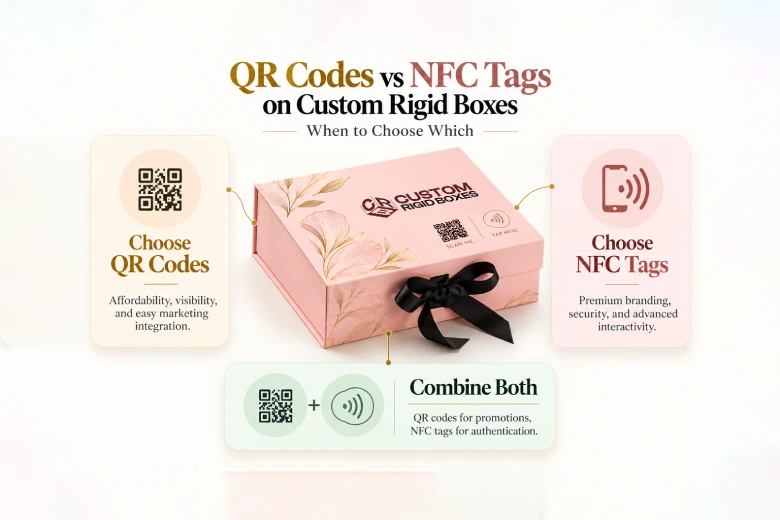
Choosing between QR codes and NFC tags depends on brand goals, budget, and customer experience.
- Choose QR Codes if you want affordability, visibility, and easy marketing integration.
- Choose NFC Tags if you want premium branding, security, and advanced interactivity.
- Combine both for maximum impact: QR codes for promotions, NFC tags for authentication.
The Takeaway
Undoubtedly, custom rigid boxes are evolving into smart packaging solutions. QR codes and NFC tags turn every box into digital gateways. QR codes offer affordability and accessibility, while NFC tags provide exclusivity and security. Together, they transform packaging into a powerful marketing and trust-building tool.
Brands that adopt smart packaging stand out. They connect with customers in new ways, protect their products, and create memorable experiences. Thus, in this modern market, QR codes and NFC tags are not just optional — they’re becoming essential.
FAQs
What Is a QR code?
QR codes (Quick Response codes) are two-dimensional barcodes that store information in a grid of black-and-white squares. They can be scanned using a smartphone camera, instantly connecting users to digital content.
What are NFC tags?
NFC (Near Field Communication) tags are small chips that enable wireless communication when tapped with a smartphone. Unlike QR codes, they don’t require a camera scan—just proximity.
What’s the purpose of adding QR codes on rigid boxes?
Adding QR codes to rigid boxes helps redirect customers to your website or landing pages, share product details, manuals, or recipes, enable discounts, loyalty programs, or contests, and support logistics and inventory tracking.
What’s the purpose of adding NFC tags on rigid boxes?
Adding NFC tags on rigid boxes helps to authenticate luxury or premium products, enable contactless payments or loyalty rewards, provide immersive brand experiences, and track supply chain and logistics data.
Should we use QR codes or NFC tags on custom rigid boxes?
Choose QR Codes if you want affordability, visibility, and easy marketing integration. Choose NFC Tags if you want premium branding, security, and advanced interactivity. You can even combine both for maximum impact: QR codes for promotions, NFC tags for authentication.